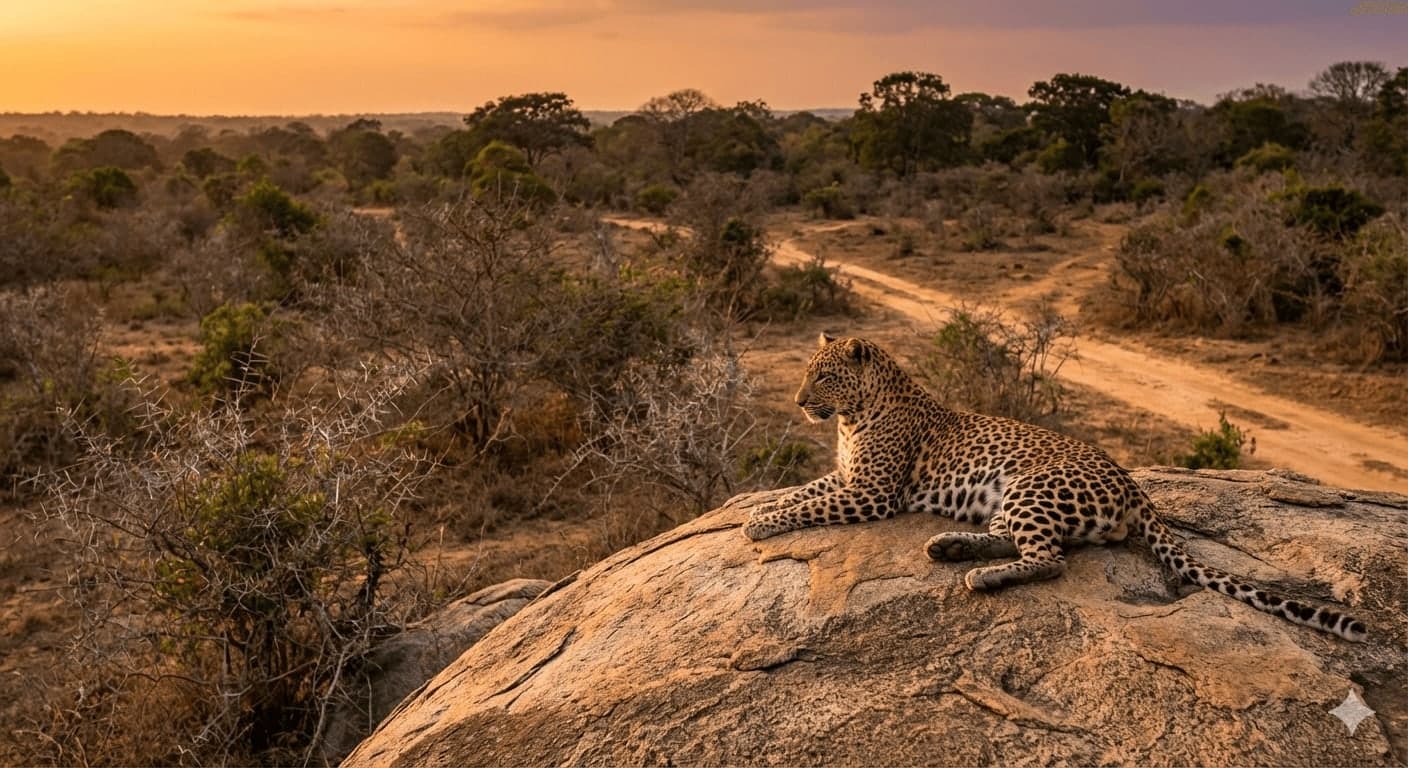
Yala National Park :The Kingdom of Shadows and Sun
Down where the red dirt of the scrubland meets the salt spray of the Indian Ocean, Yala National Park feels like a world still ruled by the wild. It’s a place of high stakes and heavy heat, famous for being the best spot on the planet to glimpse the elusive Sri Lankan leopard. But beyond the 'leopard fever,' Yala is a sensory overload of trumpeting elephants, sun-baked crocodiles, and the chaotic beauty of an ecosystem that doesn’t care about your schedule. It’s a dusty, bumpy, and utterly breathtaking ride into the heart of the island’s predator country.
Down in the southeastern corner of Sri Lanka, where the dry, thorny scrubland abruptly meets the crashing waves of the Indian Ocean, lies Yala National Park. It is a raw, untamed landscape, a place where the heat shimmers off red dirt roads and the air is thick with the anticipation of the hunt. While it’s the second-largest park in the country, Yala holds the undisputed title as Sri Lanka’s premier wildlife destination, famous globally for having one of the highest densities of leopards in the world.
More Than Just Spots
Going on safari in Yala is a sensory assault in the best possible way. The day usually starts in the pre-dawn dark, shivering slightly in an open-top jeep as you queue at the park gates. As the sun rises, turning the sky a bruised purple and orange, the park awakens.
The landscape itself is striking. It’s not a dense, canopy jungle; it’s a mixture of open plains, saltwater lagoons, and strange, massive rock monoliths that jut out of the scrub like the backbones of ancient beasts.
While everyone has "leopard fever," the magic of Yala is that the supporting cast is just as impressive. You turn a corner and find a herd of elephants bathing in a waterhole, their calves splashing joyfully in the mud. Scaly mugger crocodiles sunbathe on riverbanks looking deceptively inanimate, while peacocks—in numbers that seem impossible—dance on dead trees, flashing their iridescent tails. The birdlife here is phenomenal, a riot of color against the dusty greens and browns.
The Phantom of the Jungle
Let’s be honest, though: you come to Yala for the Panthera pardus kotiya —the Sri Lankan leopard.
Yala is unique because the leopards here are the apex predators. Without tigers or lions to compete with, they are bolder and less nocturnal than their cousins elsewhere. But that doesn’t mean they are easy to find.
The "leopard hunt" is a game of patience and luck. It involves scanning every tree limb and shadowed thicket until your eyes water. It’s the sudden crackle of the jeep radio, a driver whispering excitedly in Sinhala, and the sudden adrenaline rush as your vehicle speeds off toward a reported sighting. When you finally see one—perhaps draping itself lazily over a rock or stalking silently through the undergrowth—the chaotic race is worth it. They are magnificent, powerful phantoms that seem to melt back into the shadows the moment you look away.
Realities of the Safari
Yala is wild, but it's also incredibly popular. It’s important to manage expectations to truly enjoy it.
- The Crowds: When a leopard is spotted, it’s not uncommon for a dozen jeeps to converge on the location. It can feel a bit chaotic. The best drivers know how to hang back and find quiet spots, anticipating where the animal might move rather than joining the scrum.
- The "Yala Massage": The roads are rough dirt tracks. Be prepared for a very bumpy three-to-four-hour ride.
- Block 1 vs. The Rest: Most tourism focuses on "Block 1," which has the highest leopard density but also the most crowds. If you prefer solitude over ticking boxes, ask about safaris in the quieter Blocks 4 or 5.
Practical Tips for the Trail
If you’re heading into the scrub, here are a few things to keep in mind:
Timing is Everything: The animals are most active in the cool of the early morning (6:00 AM) and late afternoon (3:30 PM). Midday is often dead quiet.
Gear Up: Bring binoculars—they are essential. A scarf or bandana is also crucial to cover your nose and mouth against the immense amount of dust.
Hydration: It gets incredibly hot very fast. Bring more water than you think you need.
Patience: Nature is unpredictable. You might see three leopards in an hour, or none in two days. Enjoy the search as much as the find.
A visit to Yala isn't a zoo trip; it's an immersion into a vibrant, sometimes harsh ecosystem. It’s the thrill of the chase, the smell of the wild earth, and the unforgettable sight of an elephant silhouetted against a tropical sunset.