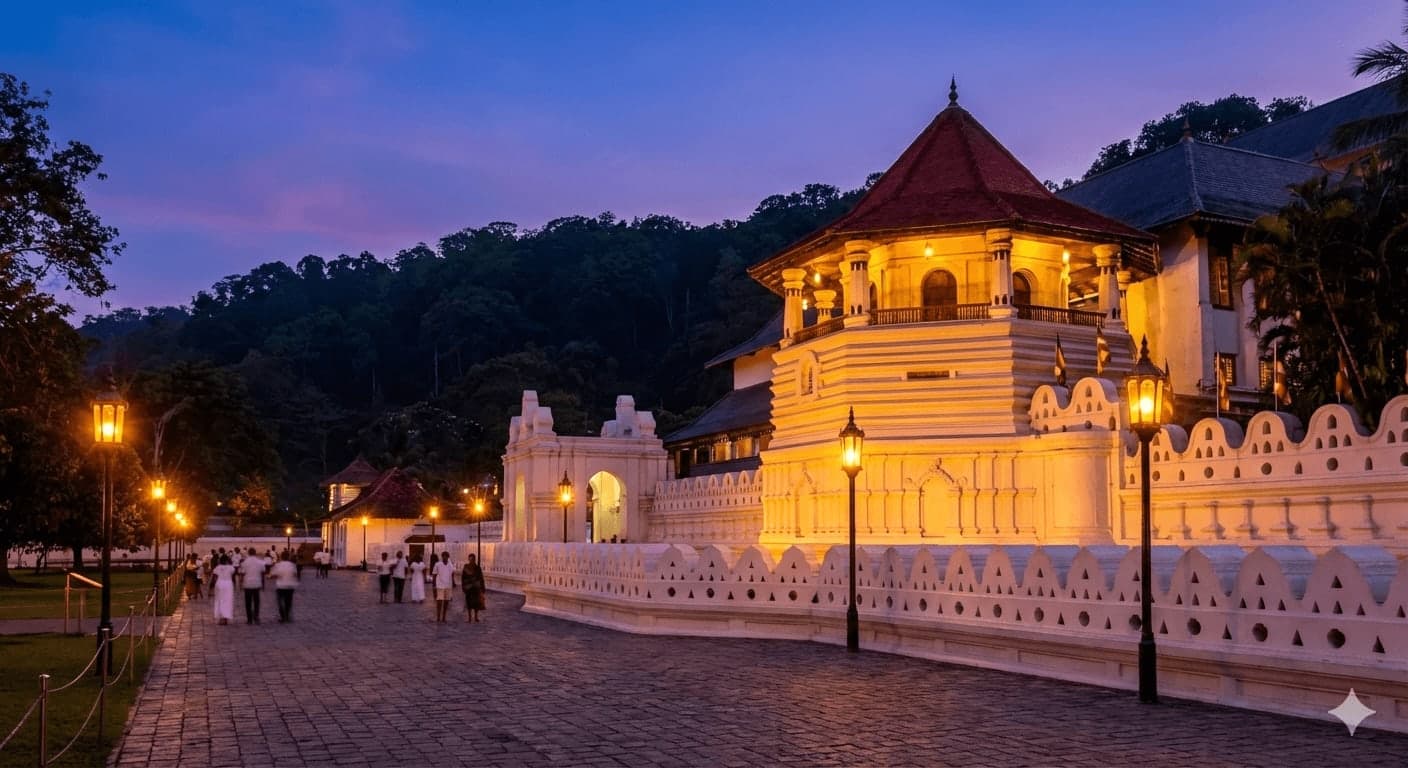
The Heartbeat of Kandy: The Temple of the Sacred Tooth Relic
In the mist-shrouded hills of Kandy, the Temple of the Sacred Tooth Relic stands as the spiritual soul of Sri Lanka. Home to the legendary relic of the Buddha, smuggled to the island in a princess’s hair, the temple is a sanctuary of golden roofs, intricate carvings, and the intoxicating scent of jasmine. From the rhythmic thud of the ritual drums to the sea of white-clad pilgrims, a visit here is a journey into the ancient heart of Sinhalese culture—a place where history, royalty, and faith are woven into every stone.
While the coastal towns of Sri Lanka are defined by the roar of the ocean, Kandy is defined by a rhythmic, ancient drumbeat. At the center of this misty hill capital sits the Sri Dalada Maligawa, or the Temple of the Sacred Tooth Relic. It isn’t just a temple; for the people of Sri Lanka, it is the spiritual heart of the nation and the final resting place of the left canine tooth of the Gautama Buddha.
A Relic of Kings and Revolutionaries
The history of the tooth relic is more than just a religious chronicle; it’s a political thriller. Legend has it that after the Buddha’s passing, the relic was smuggled into Sri Lanka in the 4th century AD, hidden in the hair of Princess Hemamali to escape a war in India.
For centuries, the relic became a symbol of the right to rule. Whoever possessed the Tooth Relic had the divine right to govern the island. This is why the temple is located within the royal palace complex of the former Kandyan Kingdom. It was the last capital of the kings, and the temple remains a fortress of tradition, standing tall even after centuries of colonial pressure.
The Experience: White Robes and Jasmine
Walking into the temple complex is a transition from the noise of Kandy’s busy streets into a space of profound stillness. Most locals visit dressed in pure white, carrying trays of pink lotuses and jasmine. The scent of these flowers, mixed with the smoky aroma of burning coconut oil lamps, is the "scent of Kandy."
- The Architecture: The most striking feature is the Pattirippuwa, the beautiful octagonal tower overlooking the lake. It was originally built by the last King of Kandy so he could address his people. Above the inner sanctum sits a massive golden roof, added in recent decades, which glints brilliantly against the backdrop of the green hills.
- The Ritual (Thevava): Three times a day—at dawn, noon, and evening—the temple comes alive. To the thunderous beat of traditional drums (Hevisi), the silver-door chamber is opened for the Puja. You won't actually see the tooth; it is kept inside seven nested golden caskets shaped like stupas, encrusted with rubies and emeralds.
- The Tusker Museum: Tucked behind the main shrine is a museum dedicated to Raja, the beloved temple elephant who served for 50 years. His taxidermied remains are a poignant tribute to the deep connection between Sri Lankan Buddhism and these majestic animals.
If You Go: A Guest in the Sacred House
The Temple of the Tooth is a living place of worship, not just a museum. To experience it properly, keep these cultural "unwritten rules" in mind:
| Feature | Details |
|---|---|
| Dress Code | Mandatory: Shoulders and knees must be covered. Wearing white is a sign of respect, though not required for tourists. |
| Timing | Aim for the evening Puja (usually around 6:30 PM). The drums and the lighting of the lamps create a powerful atmosphere. |
| Photography | You can take photos in the courtyard, but never pose with your back to a Buddha statue, and be mindful during the ritual. |
| The Perahera | If you are there in July or August, the Esala Perahera is a 10-day festival where the relic (or its casket) is paraded through the streets on elephant-back. |
There is a weight to the air in Kandy. Whether you are a believer or just a traveler, standing in the flickering light of the oil lamps as the drums echo through the stone corridors, you feel the centuries of devotion that have kept this flame burning.